
What Multifamily Developers Should Look For in an Amenity and Model Unit Designer
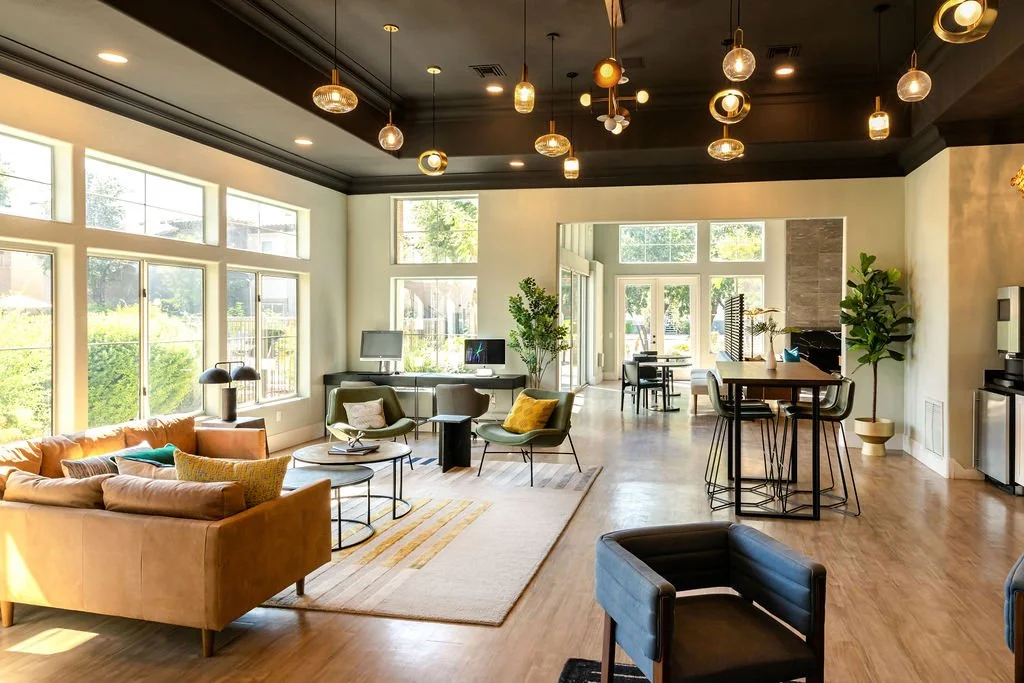
The Franklin, one of our recently completed multi-family housing projects, offers a beautiful clubhouse for residents where residents love to gather.
In a competitive Arizona rental market, the amenity spaces and the model units are not decoration. They are the leasing tool. They are where a prospective resident decides in the first ninety seconds whether this is a place worth paying a premium to live. The right interior design shortens lease-up, supports higher rents, and gives a property an identity that marketing photos can actually sell. Here is what to look for in a designer for that work.
What good amenity design actually delivers

Faster absorption: spaces that photograph beautifully and feel effortless in person move prospects to sign.
Rent premiums: residents pay more for a lifestyle they can see and feel, not for a list of features on a flyer.
A brand: a coherent identity across the lobby, the clubroom, the fitness and work spaces, and the pool that sets the property apart from the building down the street.
Retention: amenity spaces people are proud to use and to show their friends keep residents renewing.
Model units that convert
A model unit has one job: to help a prospect picture their life in the space and to make the square footage feel like the most livable version of itself. That takes furniture plans scaled to real rooms, storage and function shown honestly, and a level of styling that reads as aspirational without feeling staged. A well-designed model can carry an entire floor plan through lease-up.
Design for durability and turnover
Multifamily interiors live a harder life than a private home. The right designer specifies for it from day one: commercial-grade and contract-rated materials, finishes that clean easily and wear well, and a furniture package that can be maintained and replaced without redesigning the room. Beauty that cannot survive the traffic is a liability, not an amenity.
Work with someone who understands the pro forma
The best partner for this work designs to the budget and the return, not around them. That means value engineering that protects the guest-facing moments and trims where residents will never notice, procurement handled so the FF&E lands on schedule for the leasing office opening, and a designer who can speak to your team about absorption and rent, not only about color. Design that ignores the numbers is the fastest way to blow a budget on the wrong rooms.
Design for the Arizona resident

Rich textures, and layered metallics create an inviting space in this Fountain Hills development. (Designed by Mackenzie Collier Inteirors)
Arizona is one of the most active build-to-rent and multifamily markets in the country, and the resident here expects indoor and outdoor living to be seamless. Shaded outdoor lounges, pools that function as social hubs, and interiors that handle the light and the heat are not extras in this market. They are the amenities that decide where people choose to live.
Frequently Asked Questions
Why does amenity design matter for multifamily lease-up?
Amenity spaces and model units are where prospective residents decide whether a property is worth a premium. Strong design shortens lease-up, supports higher rents, improves retention, and gives the property a brand identity that leasing photos can sell.
What should a model unit accomplish?
A model unit should help a prospect picture their life in the space and make the floor plan feel like its most livable version, using furniture scaled to the real rooms and styling that reads as aspirational without feeling staged.
What makes multifamily interior design different from residential?
Multifamily interiors must be specified for heavy use and turnover, using contract-rated materials and finishes that wear well and clean easily, with furniture packages that can be maintained and replaced without redesigning the space.
Can an interior designer work within a development pro forma?
Yes. The right partner designs to the budget and the return, value engineering to protect guest-facing spaces, and handling procurement so the furnishings arrive on schedule for the leasing office opening.