

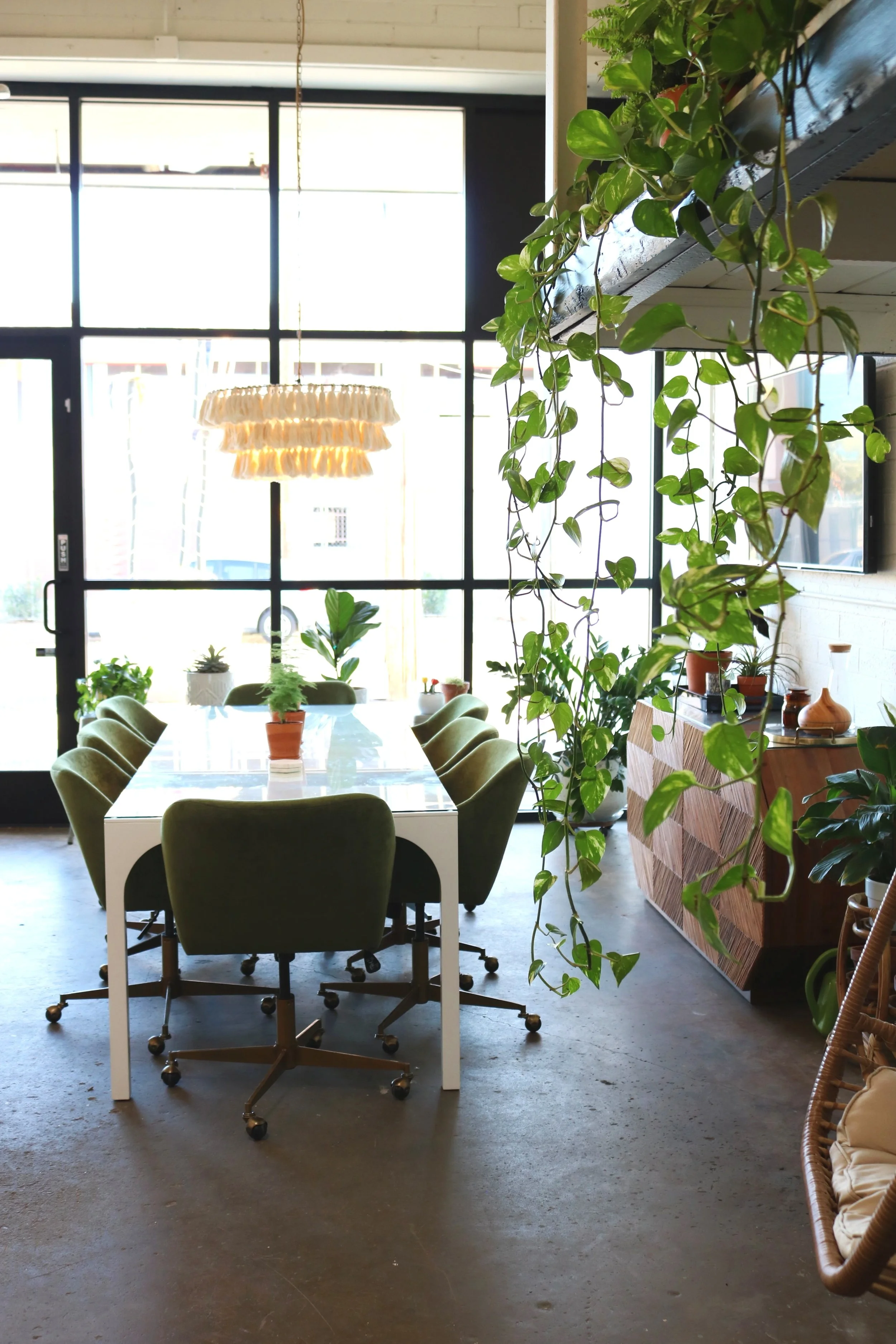
MCI designed this break room within the Lemonade Insurance HQ in Old Town Scottsdale to be a place where employees could grab a bite, have a meeting or gather for their all-hands meetings with the entire staff.
The office has a new competitor, and it is the kitchen table. Since hybrid work became permanent, employees compare the workplace to working from home, and a room full of identical desks loses that comparison every time. The companies winning the return to office are not mandating it. They are designing a place worth the commute. Here is what that looks like in Arizona.
What actually brings people back
People return for what they cannot get at home, and it is rarely a bigger monitor. It is:
Spaces for the things that are genuinely better in person: collaboration, culture, mentorship, and the energy of a room.
Variety, so the day is not spent in one chair. Focus rooms, casual lounges, real meeting spaces, and social areas each earn their place.
Hospitality, so the office feels less like a facility and more like a well-run space that respects the people in it.
A physical expression of the brand, so walking in reminds everyone what the company is and why the work matters.
Design for hybrid, not for 2019
The old formula of one assigned desk per person is over. A hybrid workplace is planned around how teams actually gather: fewer heads-down rows, more configurable rooms, technology that makes remote colleagues equal participants, and shared spaces that flex from a stand-up to a client lunch to a company all-hands. The goal is a floor plan that works on a Tuesday and on a Friday.
Wellness and the Arizona advantage
Wellness is no longer a perk, it is a reason people show up. Natural light, greenery and biophilic design, quality air, and access to the outdoors measurably improve how a space feels and performs. Arizona gives you an advantage here that few markets have: light and outdoor access nearly year round. A shaded courtyard, an indoor and outdoor connection, and interiors that handle the desert light turn our climate into an amenity.
Adaptive reuse and character
MCI designed this downtown Phoenix commercial coworking space in 2019. Originally it was an auto-body shop from the 1950s.
Some of the most magnetic workplaces in the valley are not new towers. They are older buildings given a second life. Adaptive reuse delivers character that new construction cannot buy, a sustainability story worth telling, and a sense of place that makes a company feel rooted in its city. For a growing Arizona company, the right building with the right design becomes part of the recruiting pitch.
Design that reflects who you are
The strongest workplaces we design are unmistakably their company. We have shaped spaces for fast-growing and civic-minded Arizona organizations where the interior does real work: it tells the brand story, supports the culture, and gives the team a reason to choose the office over the couch. That is the return on a workplace done well.
Frequently Asked Questions
How do you design an office employees want to come back to?
Design for what people cannot get at home: spaces for collaboration and culture, variety instead of rows of identical desks, hospitality that respects the people in the room, wellness features like natural light and greenery, and a physical expression of the brand. The goal is a place worth the commute, not a mandate.
What does a hybrid office layout look like?
A hybrid workplace has fewer heads-down desks and more configurable rooms, technology that makes remote colleagues equal participants, and shared spaces that flex from a stand-up to a client lunch to an all-hands, so the floor plan works across the whole week.
Why is wellness important in office design?
Natural light, biophilic design, quality air, and outdoor access measurably improve how a workspace feels and performs, and they are increasingly a reason employees choose to come in. Arizona's climate makes light and outdoor access a year-round advantage.
Is adaptive reuse a good option for an office?
Yes. Reworking an older building delivers character new construction cannot buy, a strong sustainability story, and a sense of place that helps with recruiting and brand identity.