
Protecting a Luxury Interior from the Arizona Sun: Heat, Glare, and Fading
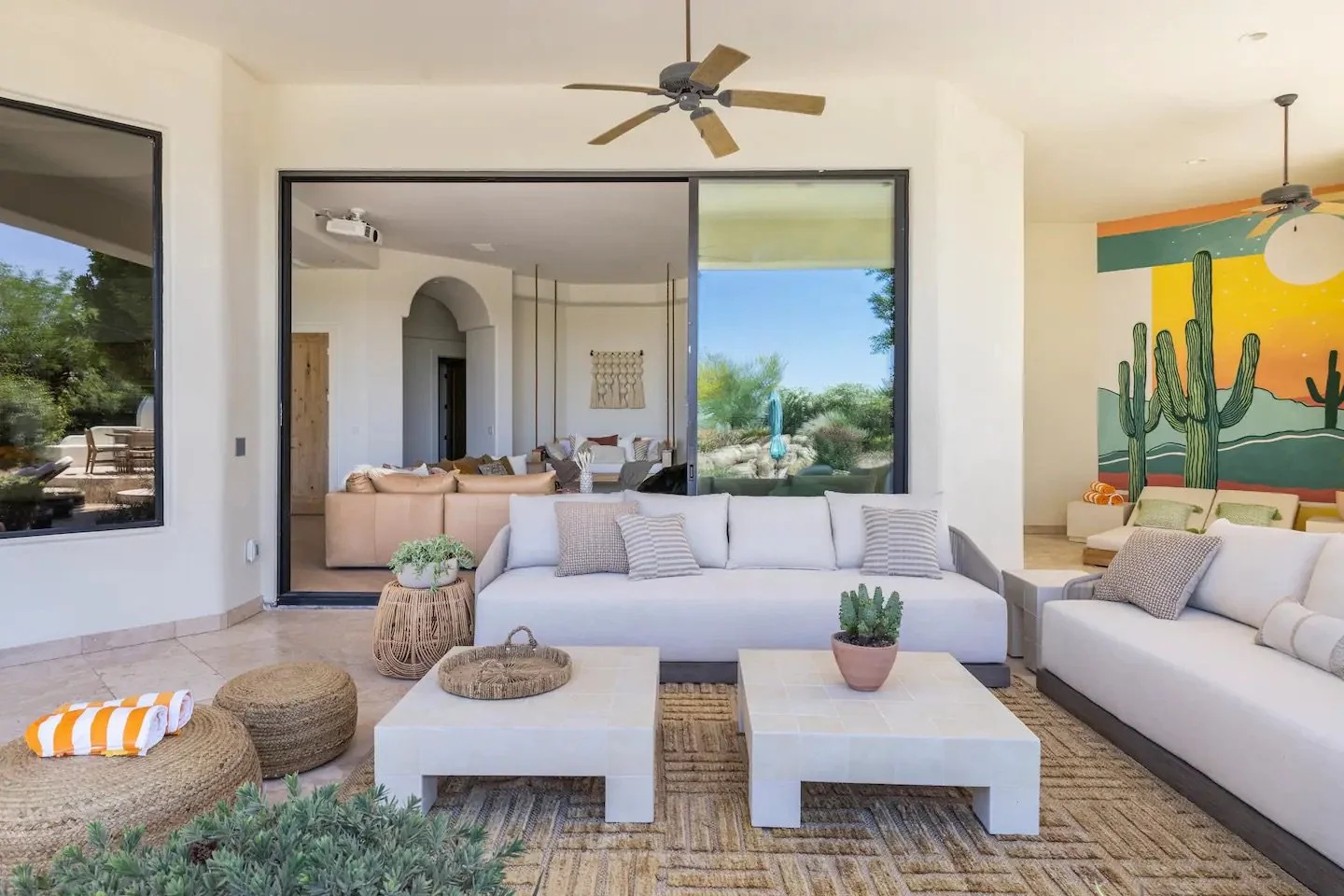
MCI designed this North Scottsdale Loggia, or covered porch, boasts incredible 180 views of the valley and a custom mural painted by a local artist.
The light is one of the reasons people fall in love with a home here. It is also the single hardest thing a luxury interior in Arizona has to survive. Direct desert sun fades textiles and art, heats rooms unevenly, and washes out the very views the house was built around. The good news is that every one of those problems is solvable in the design phase, long before anything is installed. Here is how we protect a high-end interior without asking you to give up the light.
Understand what the sun actually damages
Three forces are at work, and they call for different solutions:
Ultraviolet light fades fabrics, rugs, wood finishes, and art, often within a single season on a south or west exposure.
Solar heat gain makes rooms uncomfortable and drives up cooling costs, especially through large expanses of glass.
Glare flattens a room and makes the view harder to enjoy at exactly the hours you most want to sit in it.
Start at the glass
The most effective protection is invisible. High-performance low-emissivity glazing and quality UV window film block the majority of ultraviolet light and a large share of solar heat while keeping the glass clear. Addressing the window itself does more than any single treatment layered on top of it, and it protects everything in the room at once.
Layer window treatments with intention
In a luxury interior, window treatments do two jobs at once: they control light and they finish the room. We layer them so you can tune a space through the day.
Solar shades filter harsh afternoon sun while preserving the view. The right openness factor protects the room and keeps the mountains in frame.
Drapery in performance textiles softens the architecture and adds a second layer of control for the hottest hours.
Motorization on the tall or hard-to-reach windows means the shades actually get used, which is the whole point.
Choose materials that were made for this climate
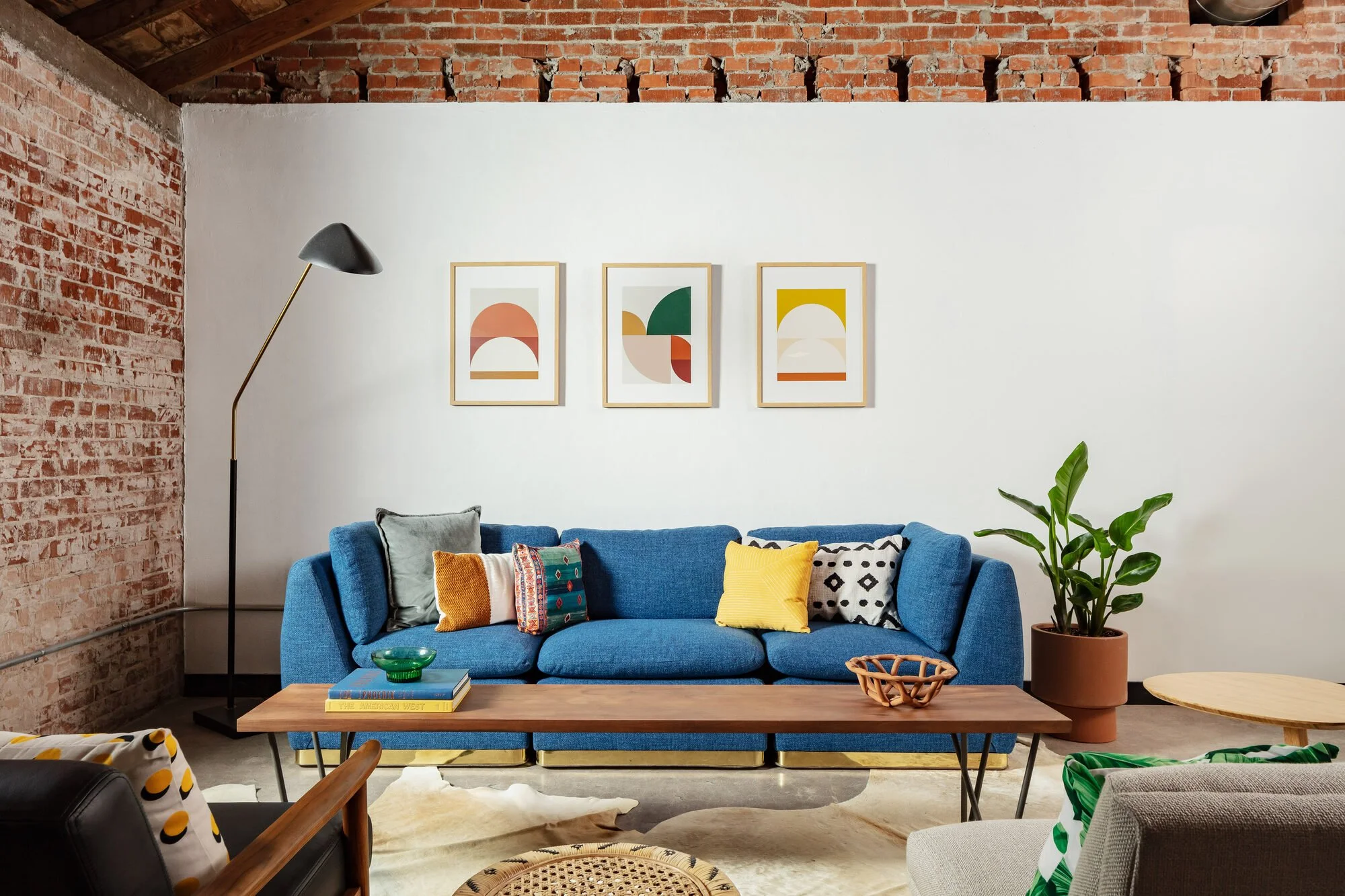
Specification is where a designer earns their fee in Arizona. We select for longevity as much as for beauty:
Solution-dyed and performance fabrics that resist fading and hold their color.
Stone and porcelain that stay cool and shrug off intense light.
Wood finishes and rugs chosen with their exposure in mind, so a west-facing room is not specified like a shaded one.
Protect the art and the pieces you love most
Fine art, antiques, and heirloom textiles are the most vulnerable and the hardest to replace. We plan their placement around exposure, use UV-filtering glazing on framed work, and keep the most sensitive pieces off the walls that take direct afternoon sun. A beautiful room that quietly destroys your collection is not a finished room.
Design the layout around the light

The most elegant solution is often architectural. Deep overhangs, considered orientation, shade structures, and thoughtful placement of the rooms you use in the afternoon can reduce the problem before a single shade goes up. When we plan a remodel or a new build, the path of the sun is part of the floor plan, not an afterthought.
Frequently Asked Questions
How do I protect my furniture and art from the Arizona sun?
Start at the glass with low-emissivity glazing or quality UV film, which blocks most ultraviolet light for the whole room. Layer solar shades and performance drapery for control through the day, specify fade-resistant materials, and use UV-filtering glazing on framed art. Keep the most sensitive pieces off walls that take direct afternoon sun.
Will window film ruin my view?
No. Quality UV window film is clear and blocks the majority of ultraviolet light and much of the solar heat while keeping the glass transparent, so the view stays intact.
What fabrics hold up best in Arizona sunlight?
Solution-dyed and performance textiles resist fading and hold their color far better than standard fabrics, which makes them the right choice for any room with strong sun exposure.
Does a west-facing room need different materials?
Yes. West and south exposures take the most intense light and heat, so finishes, textiles, and rugs in those rooms should be specified for durability, not chosen the same way as a shaded room.