
A whole home remodel in the Phoenix area typically takes nine to sixteen months from the first meeting to the day you move back in, and this is the part that surprises everyone: roughly two thirds of that happens before a single wall comes down. A single kitchen usually runs five to seven months on the same basis. The construction is the visible part and the short part. The deciding is the long part.
I have been designing remodels for fifteen years, a great many of them in historic Phoenix homes that were built before anyone thought about where a dishwasher might go—just like many of our Historic Remodels, where preserving historic character required navigating tight timelines and meticulous pre-planning. The projects that run smoothly and the projects that spiral are almost never separated by budget or by contractor. They are separated by whether the decisions happened in the right order.
The principle that governs everything
Here is the thing nobody tells you at the beginning, and it reorganizes how you think about the entire project.
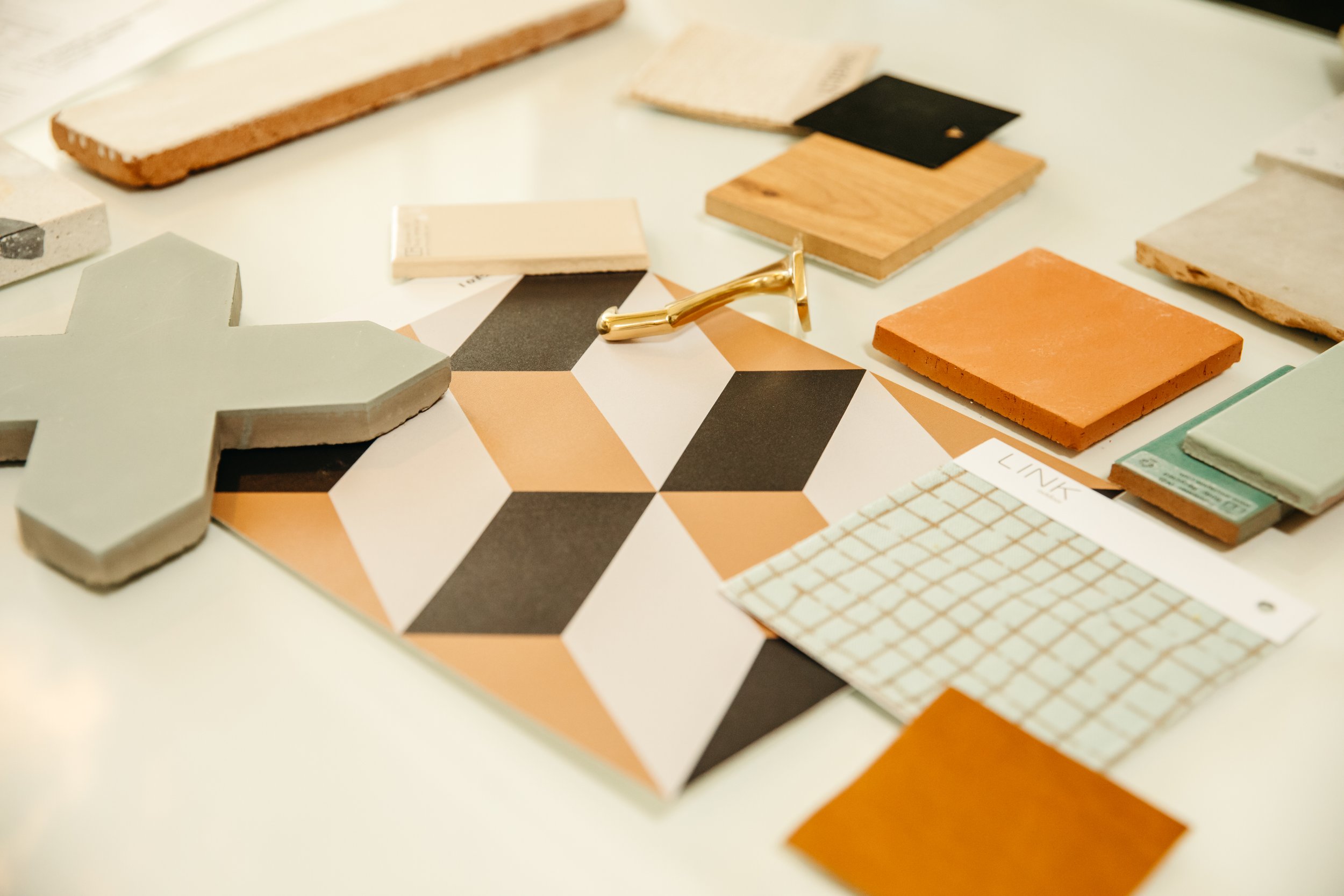
Decisions are sequenced by lead time, not by importance. You choose things in the order they need to arrive, which has very little to do with how much you care about them. Windows, custom cabinetry, specialty tile and certain plumbing fixtures get decided early not because they matter most, but because they take the longest to show up. Paint color, which people agonize over for months, can be chosen almost at the end, because paint is always available.
Once you accept that, the whole sequence stops feeling arbitrary. You are not designing in order of interest. You are designing in order of who needs the answer first.
What actually happens, in order
Programming and existing conditions (2 to 3 weeks): We measure everything, photograph everything, and find out how you actually live rather than how you think you should. Where the mail lands, which door everyone really uses, whether the formal dining room has hosted a meal since 2019. In older homes, this phase also turns up the surprises: the addition that was never permitted, the floor that is an inch and a half out of level, or the wall that turns out to be carrying something structural.
Space planning (3 to 5 weeks): Layout, walls, plumbing locations, how rooms connect. This is the single most valuable phase of the entire project and also the cheapest, because changing your mind here costs a revised drawing. Move the same wall six months from now and it costs framing, electrical, plumbing, drywall and two weeks of schedule. I push clients hard to explore options here precisely because it is free, and I would rather have an uncomfortable conversation about the plan in week four than a very expensive one in month eight.
Design development (6 to 10 weeks): Cabinetry, tile, plumbing fixtures, lighting, hardware, flooring, and everything that makes the house look like something. This is where most of the design happens and where the long lead items get committed. It runs long because each decision constrains the next one, and because ordering tile before you have settled the cabinetry is how people end up with a beautiful floor that fights the kitchen.
Documentation and the bid package (3 to 4 weeks): Drawings, elevations, schedules, and specifications a contractor can actually price. This phase feels like an interruption to clients because nothing new is being designed, but it is what makes competitive bids comparable to each other. If three contractors are pricing from three different understandings of the project, the low bid is not the low bid. It is the one that understood the least.
Bidding and permitting (4 to 8 weeks, sometimes longer): Contractors need time to price properly, and the city needs time to review. Historic district review adds to that in neighborhoods like Coronado, Encanto-Palmcroft and F.Q. Story, and structural work adds more. Permitting is the phase most likely to run past what anyone predicted, so build a cushion in and confirm current review timelines with your contractor rather than with a blog post.
Construction: A kitchen typically runs eight to twelve weeks, a bathroom four to eight, and a whole home four to nine months depending on scope and how much structure is moving. This is the phase everyone pictures when they say the word remodel, and it is usually less than half the calendar.
Furniture, styling and install: Overlapping construction. More on this below, because the timing of it is where the most avoidable frustration in the entire process lives.
What locks when, and what a change costs
Every project has a curve, and understanding it will save you more money than any negotiation with a contractor.
On the plan: Changes are free. You are moving lines. Explore everything, question everything, be as indecisive as you want.
After documentation: Changes cost drawings. Modest, and entirely reasonable. This is still a fine place to change your mind about something real.
At framing, plumbing and electrical rough-in: Locations lock. Every outlet, every switch, every drain and supply line. If you want the sink under the window rather than on the island, that decision has to already be made. Rough-in is the last cheap moment for anything that lives inside a wall.
After drywall: Changes are brutal. You are undoing finished work to get to something you could have moved for nothing five months earlier. This is where change orders come from, and it is where the goodwill between a homeowner and a contractor tends to go.
Nobody plans to make a decision late. It happens because a selection was deferred, and then deferred again, and then it arrived at the one moment when it was expensive. Which brings me to the thing I would most like you to take from this post.
The five things people get out of order
Starting construction before selections are final: This is the big one, and it is responsible for more blown budgets than any other single cause. A contractor bids what they can see. Every item that is still undecided when demolition starts becomes either a stop-work moment or a change order, and both cost money and time. Finish selecting, then start.
Ordering furniture after construction ends: Furniture lead times commonly run eight to sixteen weeks, and custom upholstery longer. If you wait until the house is finished to order a sofa, you will spend a season living in a beautiful empty room. Furniture should be specified during design and ordered during construction, timed to arrive a couple of weeks after the last coat of paint.
Choosing tile late: Tile feels like a finish, so people treat it as a late decision. It is not. Tile affects floor heights, transitions, thresholds, waterproofing details and sometimes framing, and specialty tile can take many weeks to arrive. It belongs in design development with the cabinetry, not near the end with the paint.
Leaving lighting to the electrician: A lighting plan is a design document, not a field decision. If nobody has made one, you will get can lights on a grid, evenly spaced and evenly boring, and you will feel the difference every evening for as long as you live there. Lighting is also nearly impossible to change after drywall without opening the ceiling.
Hiring the contractor before the design exists: A good contractor is not a design service and does not want to be. Bring them a documented, priceable scope and you will get an accurate bid, a realistic schedule and a much better working relationship. Bring them a vague idea and you will get a number that has to change.

What is different about doing this in Phoenix
Summer changes your scheduling math. Exterior work, roofing, stucco and anything involving a crew on a roof gets slower and more expensive in July. The upside is that summer is an excellent time to be in the design phase, which happens in air conditioning, so that construction can start when the weather turns. If you want to be under construction in the fall, make sure to plan during the summer.
Older homes take longer and it is worth it. Historic homes across the central Phoenix districts routinely turn up knob and tube wiring, cast iron drain lines, additions that were never permitted, and framing that predates any code you have heard of. None of that is a reason to avoid these houses, and I have built much of my career on them. It is a reason to add time and a contingency, and to hire people who have opened these walls before and were not surprised by what they found.
Permitting varies by jurisdiction and by scope. Phoenix, Scottsdale, Paradise Valley and the surrounding cities each run their own process, and historic overlay districts add review. Ask early, plan generously, and treat any timeline you are given as the best case.
If you are not doing a whole home
Most people are not, and the same principles scale down cleanly.
For a single room, the sequence compresses but the order does not change. You still plan before you select, you still select before you start, and you still order the long lead items first. A kitchen is roughly five to seven months from first meeting to finished, and a bathroom three to five, with most of that in the deciding rather than the building.
And if you are doing this yourself, the single most useful thing you can do is to make a complete selections list before anyone picks up a tool. Every fixture, every finish, every piece of hardware, written down, priced and either ordered or ready to order. It is unglamorous work, it takes a weekend, and it will do more for your project than any amount of inspiration. A project fails on the twelve decisions nobody made, not on the one big idea.
What you can do right now to shorten all of this
Measure your house accurately and photograph every room, including the ugly corners and the inside of the closets. Any designer you hire will need this on day one, and having it ready genuinely saves time and money.
Write down how you actually use the house rather than how you would like to. Which rooms are dead. Where things pile up. What time of day each room is unbearable. That list is worth more to me than a folder of pictures, though I will happily take the pictures too.
Figure out your real timeline backward from whatever is driving it: a baby, a graduation, a holiday, a lease ending. If you need to be finished by a specific date, count backward using the ranges above and you will find out immediately whether the plan is a plan or a wish. Better to know now.

Frequently Asked Questions
How long does a whole home remodel take?
Typically nine to sixteen months from the first design meeting to move-in, with roughly two thirds of that occurring before construction begins. Design and documentation commonly run three to five months, permitting and bidding one to two months, and construction four to nine months depending on scope.
How long does a kitchen remodel take?
About five to seven months from first meeting to finished, of which construction is usually eight to twelve weeks. The design and selection phase is longer than most people expect because cabinetry and specialty tile carry long lead times.
What should I decide first in a remodel?
Anything with a long lead time, which usually means windows, cabinetry, specialty tile and certain plumbing fixtures. Decisions are sequenced by how long an item takes to arrive rather than by how important it feels. Paint can wait until nearly the end.
When do plumbing and electrical locations get locked in?
At framing and rough-in. Every outlet, switch, drain and supply line has to be decided before the walls close. Changing anything inside a wall after drywall means undoing finished work.
Should I order furniture before or after construction?
During construction. Furniture lead times commonly run eight to sixteen weeks and custom upholstery longer, so furniture should be specified during design and ordered mid-construction to arrive shortly after the final coat of paint.
Can I start construction while I am still making selections?
It is possible and it is usually a mistake. A contractor bids what they can see, so every undecided item becomes a change order or a work stoppage. Finalizing selections before demolition is the single most reliable way to protect a budget and a schedule.
Do historic homes take longer to remodel?
Generally yes. Older homes frequently reveal outdated wiring, cast iron plumbing, unpermitted additions and framing that does not meet current code, and historic district review adds time to permitting. Both are manageable with an appropriate contingency and a team experienced in these houses.
Is summer a good time to remodel in Phoenix?
Summer is a difficult time for exterior work and an excellent time for the design phase, which happens indoors. Planning through the summer so construction can begin in the fall is a common and sensible sequence here.

Who is telling you this
I am Mackenzie Collier. I founded Mackenzie Collier Interiors in Phoenix in 2011, and my team and I have completed more than five hundred projects. A great many of them have been historic homes in the central Phoenix districts, along with custom builds, whole home remodels and commercial work including Lemonade Insurance, Greenwood Brewing, Reshoevn8r and DeSoto.
The timelines here are from experience rather than from a survey, and every project finds its own way to be unusual. Treat them as planning ranges, add a cushion, and remember that the phases you are tempted to rush are the ones that determine whether the rest of it goes well.