
Why Most People Don’t Need More Options. They Need Fewer Decisions
If you have ever started a renovation, remodel, or furnishing project and suddenly found yourself staring at hundreds of tile samples, cabinet finishes, or furniture options, you are not alone.
Many homeowners assume the biggest challenge in a design project is figuring out their personal style. In reality, the biggest challenge is something much less visible. It is cognitive overload.
At Mackenzie Collier Interiors, we see this on Phoenix home remodels and commercial design projects all the time. Clients do not struggle because they lack taste. They struggle because they are being asked to make too many decisions without a clear framework.
More options rarely create better results. They create exhaustion.
The Myth That More Choices Lead to Better Design
Modern design platforms, Pinterest boards, Instagram feeds, and home improvement stores offer an endless stream of inspiration. While this can be exciting at first, it often leads to confusion.
Instead of helping people refine their vision, too many options create three common problems:
Decision fatigue
Second guessing every choice
Projects stalling out due to uncertainty
When homeowners are asked to evaluate dozens of tile options, lighting styles, or furniture layouts, they quickly reach a point where the brain simply shuts down. That is when people begin saying things like:
"I like all of them."
"I do not know what I want anymore."
"Can we just pick something?"
This is not a failure of taste. It is a predictable response to too many decisions.

Why Designers Limit Options
One of the most valuable things an experienced interior designer does is remove unnecessary decisions from the process.
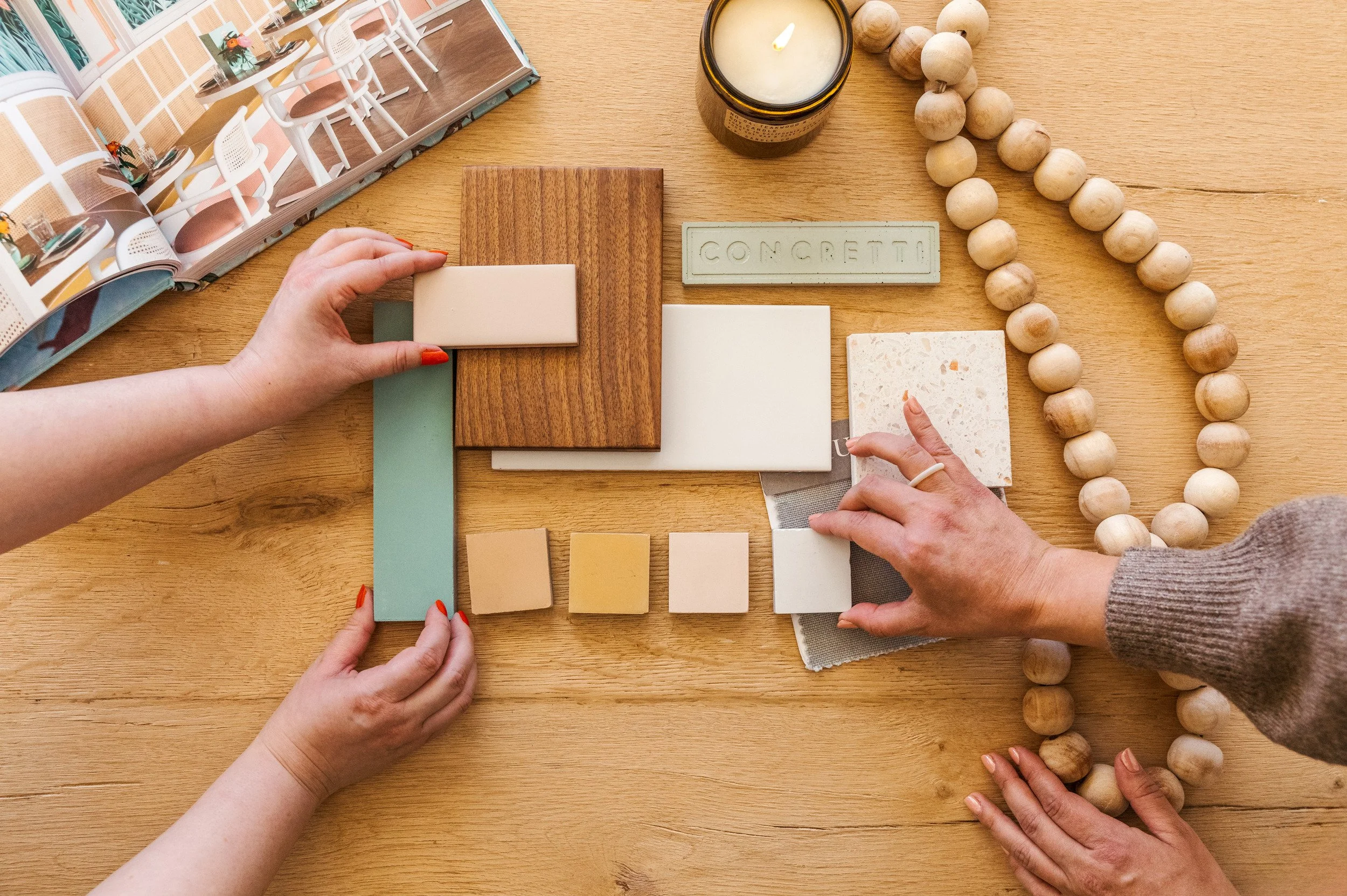
Instead of presenting hundreds of possibilities, designers narrow the field down to a few highly curated options that align with the project's goals, budget, and overall aesthetic direction.
On many Phoenix residential interior design projects, our team will review hundreds of products behind the scenes. What the client ultimately sees may be three or four strong options that work together cohesively.
This approach protects the client's mental bandwidth while still ensuring the design feels personal and intentional.

The Hidden Cost of Too Many Decisions
Decision fatigue does more than make projects stressful. It can also impact the final outcome.
When people are overwhelmed, they tend to default to the safest option available. This often results in spaces that feel neutral, generic, or disconnected from the homeowner's personality.
A thoughtful design process does the opposite. It removes unnecessary noise so the right decisions can stand out clearly.
How Professional Design Simplifies the Process
At Mackenzie Collier Interiors, our design process is structured specifically to reduce decision overload.
We begin by identifying the project's priorities, constraints, and functional needs. From there, we develop a clear design direction before presenting curated materials, layouts, and furnishings that work together.
Clients are still involved in every major decision. The difference is that those decisions are focused and intentional rather than overwhelming.
This structure allows homeowners and business owners to stay engaged without feeling buried under endless options.

The Bottom Line
Great design is not about presenting more choices. It is about presenting the right choices.
When the decision making process is simplified, projects move faster, budgets stay more predictable, and the final result feels far more cohesive.
If you are planning a renovation, custom home, or commercial project in Arizona, working with an experienced interior designer can help transform an overwhelming process into a structured and manageable one.
At Mackenzie Collier Interiors, our role is to bring clarity to complex projects so you can focus on the big picture instead of getting lost in the details.